
Acrobat Ant
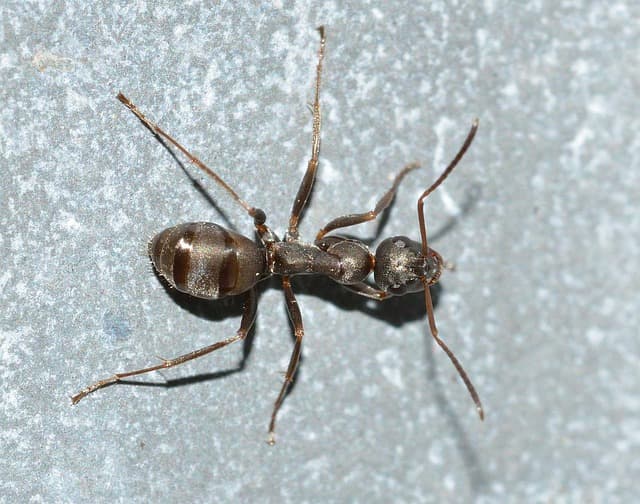
- Scientific Name:
- Crematogaster spp.
- Size:
- 1/8 inch (2.6 to 3.2 mm)
- Color:
- Light red to brown or black
- Danger Level:
- Low — a nuisance and a stubborn one, but not medically dangerous
Identification
Acrobat ants get their name from the heart-shaped abdomen they raise up over their body and head when disturbed or threatened — it's the easiest way to identify them without a magnifying glass. They're small, ranging from light red to dark brown or black, and often travel in visible trails.
They acquire food largely through predation of other insects, using venom to stun prey and a trail-laying process to lead nestmates to a food source.
Why Acrobat Ant Are a Problem in Arizona
Acrobat ants nest in a wide range of places around a Valley home — wall voids, under stucco, in irrigation boxes, and especially in wood that's already been softened by moisture or old termite damage. Irrigated lawns and landscaping give them a steady supply of food and moisture year-round, and colonies can be large and persistent once established.
They're considered one of the more difficult household ants to fully eliminate with store-bought sprays, since disturbing a colony without addressing the nest itself often just scatters it into multiple smaller colonies.
What to Expect From Legacy
Inspection to find the actual nest location, not just the visible trail
Identification of moisture or wood-damage conditions that may be attracting them
Targeted treatment at the colony, not just a surface spray along the trail
Exterior perimeter treatment to reduce future entry
Follow-up if activity continues between visits
30 Days Money Back Guarantee
We accept all credit and debit cards!
Your pest problems.Our proven solutions.
You are our #1 priority. We show up on time and do the job right the first time.