
Termite Control in Queen Creek, AZ
Queen Creek's farmland history means termite risk isn't just an old-house problem here — new construction needs a pretreatment plan just as much as an established home needs an inspection.
Termites We Treat in Queen Creek
Part of our full termite control services across the Phoenix metro.
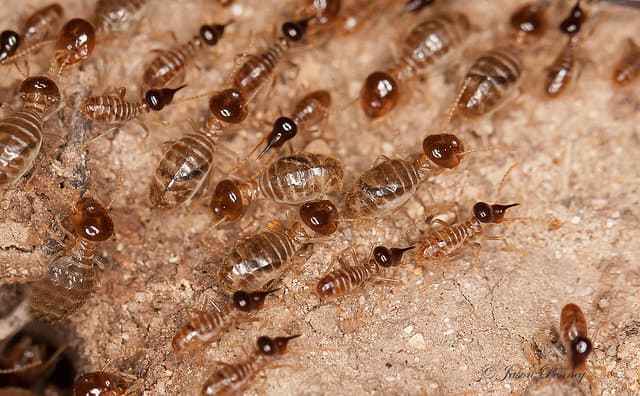
- Most common in AZ:
- Yes — the dominant termite species across the Phoenix metro
- Diet:
- Wood, cellulose, and paper products, accessed through mud shelter tubes
- Needs:
- Consistent soil moisture — irrigation, canals, and leaks all attract them
- Swarm season:
- Most active after monsoon storms (Jul–Sep) and again in spring
Subterranean Termites
Subterranean termites travel from the soil into a structure through mud shelter tubes, and they're the termite species we see by far the most in Queen Creek. They need constant contact with moisture, which is exactly what irrigation, canals, and mature landscaping provide.
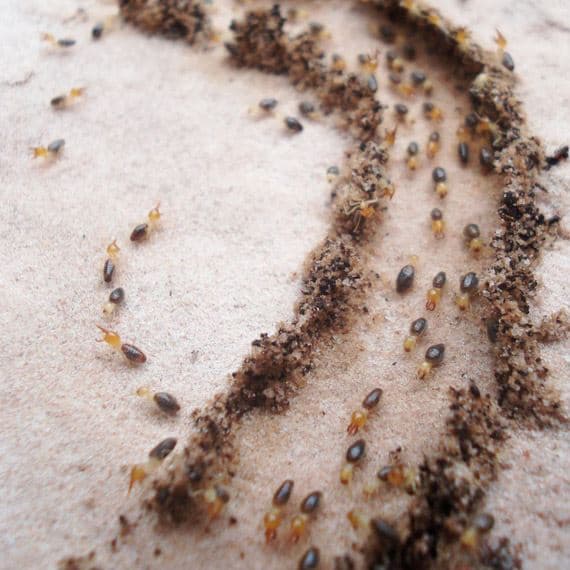
- Common in AZ:
- Less common than subterranean, but present in the Valley
- Diet:
- Dry, sound wood — framing, furniture, and trim, no soil contact needed
- Signs:
- Small pellet-like frass piles and clean, round exit holes
- Treatment:
- Localized spot treatment or structural fumigation for heavy infestations
Drywood Termites
Drywood termites don't need soil contact at all — they live directly inside dry wood, including framing, furniture, and trim. They're less common here than subterranean termites, but we still find and treat them in Queen Creek homes. Read more about drywood termites.
Why Queen Creek sees real termite pressure
Former farmland leaves behind exactly what subterranean termites look for
Much of Queen Creek was farmland or orchards before it was neighborhoods. Old irrigation lines, buried roots, and fence posts left in the ground are a ready food and moisture source for subterranean termites, on lots old and new alike.
New-construction communities still need a pretreatment or post-construction termite plan — the framing lumber going into a brand-new home is just as attractive to termites as an older structure once conditions are right.
Signs of Termites to Watch For
Pencil-width mud shelter tubes running up a foundation, slab edge, or fence post.
Discarded, translucent wings near windowsills or doors after a swarm.
Wood that sounds hollow or papery when tapped.
Sagging or slightly springy flooring near exterior walls.
Notice any of these in your Queen Creek home? Don't wait — request a free inspection below.
Our Termite Treatment Approach
Free inspection — we identify the species, the entry points, and the extent of activity before recommending anything.
A treatment plan matched to what we find: liquid soil barrier, bait stations, or post-construction/pretreatment for new builds.
Owner-operated, with the owner present on every termite job — not just a technician following a script.
A written report you can use for real estate transactions, plus follow-up monitoring so it stays solved.
Termite Inspections Near Queen Creek
We regularly inspect and treat homes throughout Queen Creek and the surrounding communities, including:
Recent Termite Jobs in Queen Creek


What Our Customers Say
“We called last minute needing a termite inspection and Legacy was amazing! They came out right away and did a wonderful job!”
“I definitely recommend Legacy for all things pest control! They came out immediately after my brother purchased his home after finding a previous bug...”
Call us now (480) 582-0777
Free termite inspections in Queen Creek. Owner-operated, with the owner on every termite job.
Call (480) 582-0777Request a termite inspection in Queen Creek
Frequently Asked Questions
Find answers to common questions below
Termites don't wait, and neither should you.