
Mosquitoes
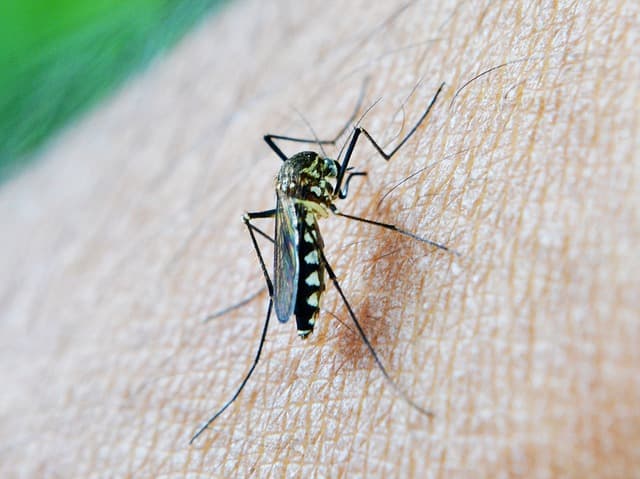
- Common Local Species:
- Culex (active at dusk/dawn) and Aedes aegypti (active in daytime)
- Size:
- About 1/4 inch (6 mm)
- Color:
- Brown to black, some with white markings
- Danger Level:
- Moderate — a real disease-vector risk, not just a nuisance bite
Identification
Mosquitoes need standing water to breed, and it doesn't take much — a clogged gutter, a saucer under a potted plant, or a low spot that holds water after irrigation is enough. Culex mosquitoes, the more traditional dusk-and-dawn biters, are the species behind most West Nile virus concerns in Arizona.
In recent years, Aedes aegypti — a smaller, daytime-biting mosquito with white markings on its legs — has become established in Valley neighborhoods too, which is why mosquito activity isn't limited to evening hours here anymore.
Why Mosquitoes Are a Problem in Arizona
Between canal-fed lakes in master-planned communities, retention basins, and the sheer number of backyard pools and water features across the Valley, there's no shortage of standing water for mosquitoes to use. The warm season here also runs longer than in most of the country, which means a longer breeding window each year.
Mosquito-borne illness is a genuine public health concern tracked by Maricopa County, not just an inconvenience — which is why breeding-source control matters as much as any spray.
What to Expect From Legacy
Inspection of your property for standing-water breeding sites
Treatment targeting both breeding sources and resting areas in vegetation
Perimeter treatment to reduce adult mosquito activity in your yard
Recommendations on eliminating standing water you may not have noticed
30 Days Money Back Guarantee
We accept all credit and debit cards!
Your pest problems.Our proven solutions.
You are our #1 priority. We show up on time and do the job right the first time.