
Flies
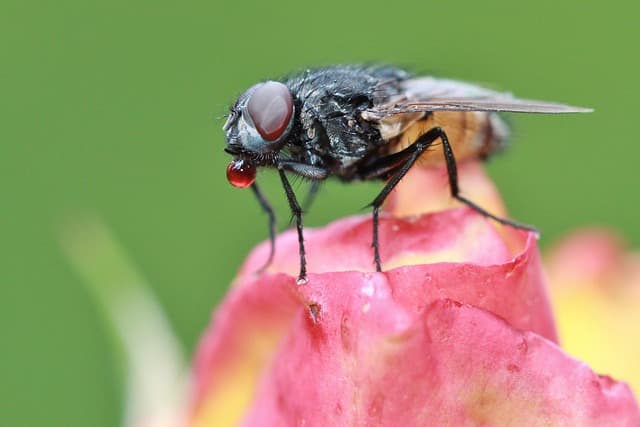
- Scientific Name:
- Musca domestica (house fly)
- Size:
- About 1/4 inch (6 to 7 mm)
- Color:
- Gray, with four dark stripes on the thorax
- Danger Level:
- Low direct risk, but they can spread bacteria onto food and surfaces
Identification
The common house fly is gray with four narrow dark stripes running down its thorax, roughly a quarter-inch long, with a fast, erratic flight pattern that makes them hard to swat. They breed in decaying organic matter — garbage, pet waste, and rotting produce are all common sources — and a single breeding cycle can produce a new generation in about a week during warm weather.
Because they land on waste and then on food or countertops, house flies can transfer bacteria well beyond what their size suggests.
Why Flies Are a Problem in Arizona
Arizona's long warm season means fly breeding cycles run longer here than in cooler climates — more months where conditions favor rapid reproduction. Backyard trash areas, pet waste, and any standing organic debris left in the heat break down fast and attract flies quickly.
Horse properties and homes near agricultural land, common in parts of the East and West Valley, see even more fly pressure than a typical suburban lot.
What to Expect From Legacy
Identification of breeding sources around the property, not just the flies themselves
Exterior treatment targeting resting and breeding areas
Recommendations on sanitation changes that make the biggest difference
Follow-up service if a persistent breeding source is nearby (like a neighboring property)
30 Days Money Back Guarantee
We accept all credit and debit cards!
Your pest problems.Our proven solutions.
You are our #1 priority. We show up on time and do the job right the first time.